Why Mar Vista Appeals To Long-Term Westside Buyers
June 11, 2026
June 11, 2026
If you plan to stay on the Westside for years, not just for the next lease cycle or market swing, Mar Vista tends to stand out quickly. It offers something many long-term buyers want but struggle to find in Los Angeles: an established residential feel, useful lot sizes, and strong access to the rest of the Westside without being directly on the coast. If you are weighing where long-term value really comes from, Mar Vista gives you a lot to consider. Let’s dive in.
One of Mar Vista’s biggest advantages is location. In the broader Palms-Mar Vista-Del Rey planning area, it sits in a well-connected part of the Westside, framed by the I-405 and I-10 and shaped by major corridors like Venice, Sawtelle, Pico, Sepulveda, and Culver.
That access matters when you are thinking beyond a short-term move. SurveyLA describes the area as roughly 10 miles west of downtown Los Angeles and historically connected to Santa Monica, Culver City, Palms, and Venice. For many buyers, that means you can stay plugged into the Westside lifestyle and commute patterns without needing to buy directly at the beach.
Long-term buyers often focus on what life will feel like day to day, not just on a map. Mar Vista benefits from access to the Metro E Line through nearby Palms and Culver City stations, which adds another transportation option for getting around the Westside and beyond.
The neighborhood also benefits from corridor improvements that strengthen local mobility. Planning documents note the Ballona Creek Bike Path runs about 7 miles from east Culver City to the Pacific Coast Bike Path, and the Venice Boulevard Safety and Mobility Project improved bus, bike, and pedestrian access to the Culver City E Line station. That kind of connectivity can make a real difference over time.
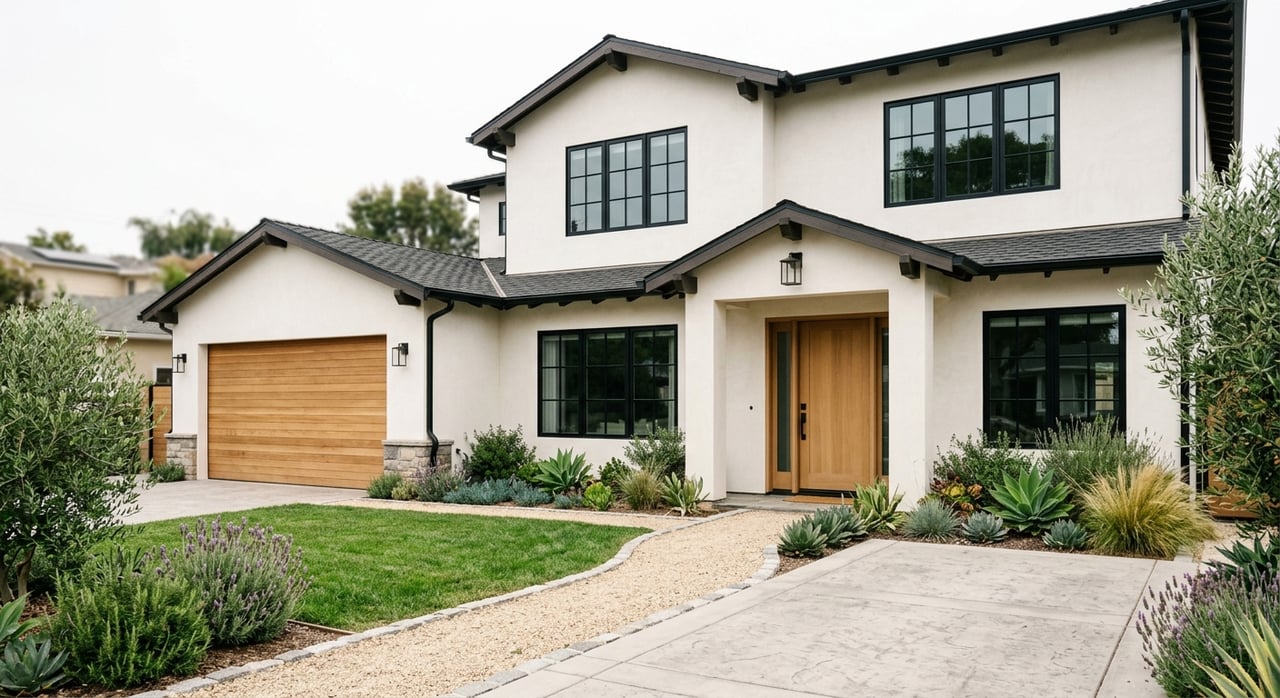
A major part of Mar Vista’s appeal is that it still reads as a low-scale residential neighborhood in many of the areas buyers value most. City Planning notes that most low-scale residential development in the plan area is west of Sawtelle in Mar Vista, and those low residential areas are defined as single-family housing on lots of at least 5,000 square feet.
For long-term owners, that pattern can be meaningful. You are not just buying a house. You are also buying into the surrounding street experience, the rhythm of the blocks around you, and the likelihood that the neighborhood qualities you value will still matter years from now.
The CD11 neighborhood profile notes that residents fought upzoning in the 1950s, which left Mar Vista considerably less dense than many nearby communities. City Planning also says the broader plan area is predominantly residential, with commercial land making up only about 6% of the total land area.
That balance is part of what many buyers respond to. You can have interior residential streets and neighborhood continuity while still being close to services and corridor-based retail. For someone buying with a 5- to 15-year horizon, that combination often feels more durable than a trend-driven location story.
On the Westside, land utility often plays a major role in long-term appeal. In Mar Vista, buyers are often drawn to the fact that many low residential areas have minimum lot sizes of 5,000 square feet, which can offer more breathing room than in some nearby neighborhoods.
That extra space can matter in very practical ways. A larger lot may support outdoor living, future renovation flexibility, or simply a more comfortable separation between homes. Even if you do not plan major changes, lot utility can still shape how a property lives over time.
The neighborhood includes older planned districts with features that stand out even within the Westside. The Oval planning district, for example, is known for deep, uniform front setbacks, one- and two-story single-family homes, and in some cases lot dimensions as large as 150 by 250 feet or more than an acre.
Planning documents also note that some of the finest homes are in Mar Vista Hills, while another pocket between Pacific Avenue and Washington Boulevard, and between East Boulevard and Marcasel Avenue, includes relatively large lots. These details help explain why Mar Vista often attracts buyers who look closely at land, not just square footage.
Mar Vista appeals to buyers who want variety without losing neighborhood cohesion. City planning materials describe residential properties from the 1910s through the 1930s in styles such as Craftsman, Neoclassical, Spanish Colonial Revival, and Tudor Revival.
That range gives the neighborhood texture. Instead of feeling dominated by one era or one type of construction, Mar Vista reflects many phases of Los Angeles residential development. For long-term buyers, that often creates a stronger sense of place.
The Gregory Ain Mar Vista Tract gives the neighborhood a distinct mid-century modern presence. It includes 52 parcels of one-story, single-family Modern homes completed in 1948, with a park-like landscape design that intentionally opens space between houses.
That is not just an architectural footnote. It is an example of how Mar Vista has preserved unique residential patterns that continue to shape its identity. Buyers who care about design, neighborhood continuity, and long-term livability often notice these details.
Another reason Mar Vista draws long-term buyers is the way it appears to evolve. According to the community plan, most recent new development has involved rebuilding or remodeling existing single-family homes rather than rapid, wholesale replacement.
That can be reassuring if you want a neighborhood that changes through reinvestment instead of losing its core identity all at once. Over a long ownership period, many buyers value that sense of continuity as much as they value the home itself.
The long-term planning framework also matters here. The Palms-Mar Vista-Del Rey Community Plan was adopted in 1997 and is now being updated, and current planning documents emphasize preserving historic resources and keeping new development compatible with existing neighborhood character.
The Gregory Ain Mar Vista Tract is also the city’s first post-World War II HPOZ. For buyers thinking years ahead, that focus on preservation and compatibility can support the qualities that made the neighborhood attractive in the first place.
It is important to look at Mar Vista clearly. This is not typically the Westside option buyers choose because it is the cheapest. Recent market data in the research shows a March 2026 median sale price around $2.1 million, with Zillow reporting $2,021,000 and Redfin reporting about $2.1 million.
That pricing supports an important point. Mar Vista’s long-term appeal is tied more to land utility, established residential character, and central Westside positioning than to bargain pricing. Buyers are often paying for a combination of location and neighborhood durability.
If you are considering Mar Vista, it helps to evaluate properties through a long-term lens. Instead of asking only whether a home feels competitive today, you may want to ask how the lot, block, access, and surrounding housing pattern could support your plans over the next several years.
That is especially true in a premium submarket. The right purchase often comes from understanding which features are hard to replicate and likely to stay valuable over time.
At its core, Mar Vista works for many long-term Westside buyers because it combines several qualities that are hard to find together. It is established, residential, centrally positioned, and shaped by lot character that still matters.
It also offers a version of the Westside that feels connected without feeling overly transient. If you want a neighborhood with architectural variety, lower-density residential streets, and practical access to the broader Westside, Mar Vista makes a compelling case.
If you are trying to decide whether Mar Vista fits your goals, the key is to look past surface-level appeal and focus on the fundamentals. Neighborhood continuity, lot utility, planning compatibility, and daily access are often the traits that support confidence over the long run.
When you are buying in a market like this, calm strategy matters. If you want thoughtful guidance as you evaluate Mar Vista and other Westside options, Janet Heinzle can help you navigate the process with clarity and care.
Stay up to date on the latest real estate trends.
Whether you’re buying, selling, or investing, Janet Heinzle offers clear guidance, strong advocacy, and a commitment to your success. Reach out today to begin a real estate experience defined by trust, transparency, and results.
Connect With Me To Learn More
11990 San Vicente Blvd Ste 100 Los Angeles, CA 90049