Mar Vista Neighborhood Spotlight: Westside Living Guide
May 14, 2026
May 14, 2026
If you want Westside access without the nonstop buzz of the beach districts, Mar Vista stands out for a different reason. It feels residential, grounded, and locally connected, which is exactly why so many buyers keep it on their radar. Whether you are exploring a move, comparing Westside neighborhoods, or thinking about long-term value, getting to know Mar Vista can help you see where it fits. Let’s dive in.
Mar Vista sits within the Palms, Mar Vista, Del Rey Community Plan Area, surrounded by neighborhoods including Venice, West Los Angeles, Santa Monica, Culver City, Westchester-Playa Del Rey, and West Adams-Baldwin Hills-Leimert Park. That location gives you strong Westside connectivity while still feeling more low-rise and residential than some nearby areas.
City planning documents describe Mar Vista as primarily residential, and that character comes through clearly once you are on its neighborhood streets. According to the local council district neighborhood page, Mar Vista has nearly 38,000 residents and remains less dense than many neighboring communities.
For many buyers, that balance is the appeal. You can feel close to the broader Westside while living in a neighborhood with a quieter day-to-day rhythm.
One of the easiest ways to understand Mar Vista is to think of it as a neighborhood built more around homes, local routines, and community-scale destinations than around major tourist traffic. It is not defined by tall urban blocks or a dense commercial core.
The broader community plan notes that Mar Vista is still mostly low-density residential in character. Denser multi-family housing appears more along certain avenues and boulevards, which helps keep many interior streets feeling calmer and more residential.
That pattern matters if you are weighing lifestyle as much as square footage. In Mar Vista, the setting often feels more about livability and neighborhood texture than fast-paced city energy.
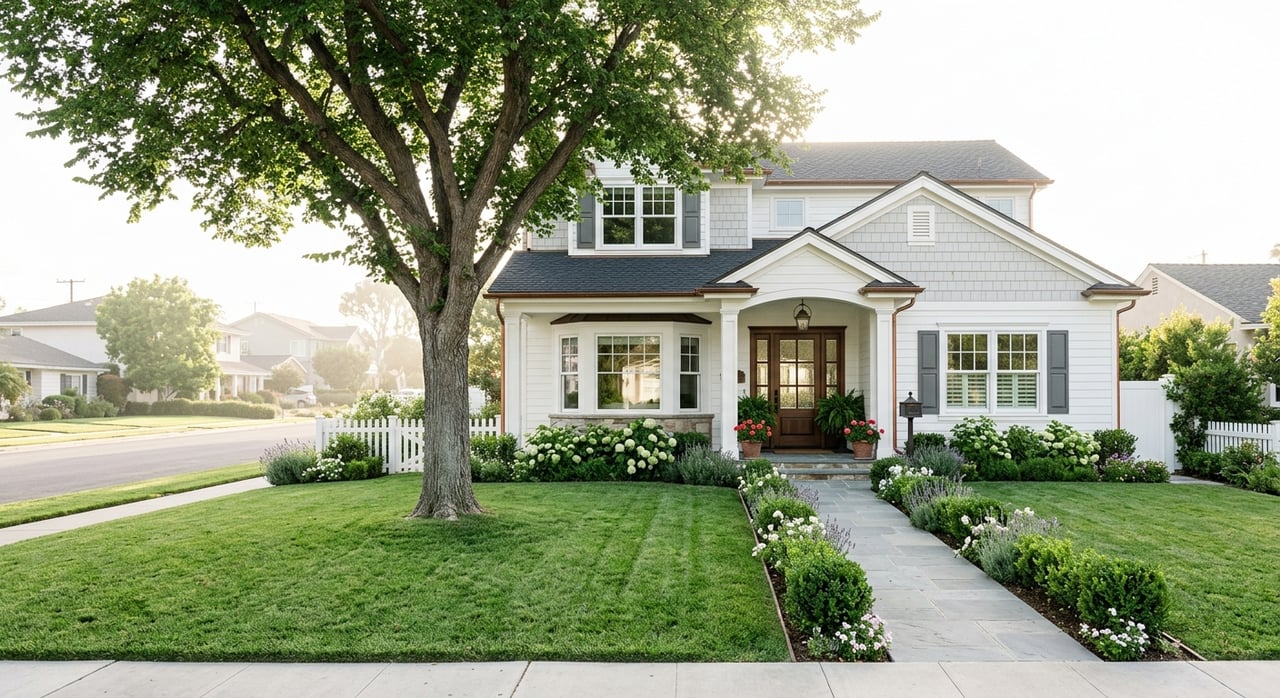
Mar Vista has a strong postwar identity, and that gives the neighborhood a distinct visual feel. Much of its housing has roots in modest one-story residential design, with styles such as Minimal Traditional appearing in local preservation planning materials.
The area also reflects broader Los Angeles postwar housing types, including Ranch, Mid-Century Modern, Contemporary, and Stucco Box forms. In practical terms, that means you may see a mix of single-family homes, low-rise apartments, and compatible infill rather than one uniform housing style.
For buyers, this creates variety without losing cohesion. You can still get a strong sense of neighborhood continuity, even when individual homes differ in age, layout, and design details.
A key architectural reference point is the Gregory Ain Mar Vista Tract, a 52-parcel Historic Preservation Overlay Zone in western Los Angeles. The City of Los Angeles describes it as a one-story single-family Modern development built in 1948.
What makes it especially interesting is that it feels coordinated without feeling repetitive. City preservation materials note that individuality comes through varied setbacks, entrance locations, lot sizes, garage configurations, and landscape design by Garrett Eckbo.
That design logic says a lot about Mar Vista more broadly. Even where the neighborhood is cohesive, it often avoids looking cookie-cutter.
Mar Vista’s charm is not just about housing. It is also about the small, steady routines that give the neighborhood its pace.
This is the kind of place where daily life tends to revolve around practical, community-level anchors. Instead of one giant draw, you have a collection of useful, familiar places that support everyday living.
The Mar Vista Recreation Center at 11430 Woodbine is one of those anchors. It offers sports courts, a roller hockey rink, a seasonal pool, picnic areas, playground space, youth sports, camps, and classes.
For anyone thinking about how a neighborhood works beyond the home itself, that matters. Recreation space, programs, and gathering spots can shape how connected and functional a neighborhood feels week to week.
The Mar Vista Branch Library on Venice Boulevard is another important part of the neighborhood rhythm. Library service in Mar Vista dates back to 1927, and the current branch opened in 2003.
Today, the branch includes Wi-Fi, computers, reading areas for children, teens, and adults, plus a meeting room. It is a practical resource, but it also reinforces the neighborhood’s community-scale identity.
If Mar Vista has a weekly town-square moment, it is the Mar Vista Certified Farmers’ Market. The official market site describes it as a bustling, transient town square, open every Sunday from 9 a.m. to 2 p.m., rain or shine.
That detail says a lot about the neighborhood’s personality. In Mar Vista, the social rhythm is often built around recurring local rituals like a Sunday market, park visits, coffee stops, and everyday errands close to home.
While much of Mar Vista feels residential, Venice Boulevard plays a major role in how the neighborhood functions. City planning materials describe it as a major east-west link to the beach and a neighborhood-serving commercial corridor.
Along Venice Boulevard, you will find small shopping centers, restaurants, and local businesses that support daily convenience. The community plan also identifies some parts of the corridor as places where more pedestrian-oriented mixed use may be appropriate over time.
For buyers and sellers alike, this kind of corridor can be a meaningful part of neighborhood appeal. It adds convenience and activity without changing the area’s overall low-rise identity.
Mar Vista may be quieter than some nearby neighborhoods, but it is not sleepy. Its restaurant and café mix adds personality, and recent coverage from LAist describes the neighborhood as a destination in its own right, with plenty of restaurants and a lively farmers market.
A few local spots help paint the picture. Grand View Market near Grand View and Venice opens daily at 8 a.m. and highlights breakfast, coffee, live music, and local foods.
Alana’s Coffee Roasters on Venice Boulevard roasts in-house almost daily. Blueys at 12825 Venice Blvd. serves daytime breakfast and lunch along with dinner, while Taverna at The Mar Vista at 12249 Venice Boulevard offers casual Greek dining with brunch, Sunday BBQ, and dinner.
You will also find neighborhood-serving restaurants on nearby corridors, including Electric Bleu on Centinela Avenue and Rustic Kitchen on Centinela Avenue, which describes itself as a gathering place for Mar Vista neighbors. Together, these spots support the sense that Mar Vista is connected, active, and very much lived in.
Mar Vista can make sense for a range of buyers because it offers a blend of residential calm and Westside access. If you want a neighborhood that feels more grounded than the busiest nearby districts, this area often earns a closer look.
You may be drawn to Mar Vista if you are looking for:
For seller homeowners, Mar Vista’s identity is also important from a positioning standpoint. Buyers are often not just comparing square footage here. They are comparing pace, character, and how a neighborhood feels to live in.
If you are considering a move to Mar Vista, pay attention to how each pocket connects to your daily routine. Since the neighborhood is largely residential, the distance to Venice Boulevard, parks, the library, or other local stops can shape your experience more than you might expect.
It is also worth noting the neighborhood’s range of home styles and lot patterns. Some properties may reflect modest postwar origins, while others may have more updated or design-forward features, and that can create meaningful differences in layout, yard space, and overall feel.
From a buying strategy perspective, clarity helps. When you know whether your top priority is architecture, lot size, proximity to local amenities, or long-term flexibility, it becomes easier to narrow the right fit.
If you are preparing to sell in Mar Vista, neighborhood context matters. Buyers looking here are often responding to a lifestyle story as much as the home itself, so presentation should reflect both the property and the setting around it.
That means highlighting the features that align with what people value in Mar Vista, such as residential feel, natural light, outdoor space, architectural character, and access to local community anchors. A thoughtful strategy can help your home feel well positioned within the broader Westside conversation.
This is where hands-on preparation and clear communication make a real difference. When the process is organized well from the start, it becomes much easier to reduce stress and move forward with confidence.
Mar Vista’s quiet charm comes from balance. It is connected but not chaotic, residential but not isolated, and full of local rhythm without feeling overly polished or performative.
That combination is hard to fake, and it is a big reason the neighborhood continues to resonate with buyers across the Westside. If you are looking for a place that feels established, approachable, and grounded in everyday livability, Mar Vista is worth understanding on its own terms.
If you are thinking about buying or selling on the Westside and want calm, informed guidance, Janet Heinzle can help you evaluate Mar Vista with a clear strategy and a low-stress process.
Stay up to date on the latest real estate trends.
Whether you’re buying, selling, or investing, Janet Heinzle offers clear guidance, strong advocacy, and a commitment to your success. Reach out today to begin a real estate experience defined by trust, transparency, and results.
Connect With Me To Learn More
11990 San Vicente Blvd Ste 100 Los Angeles, CA 90049