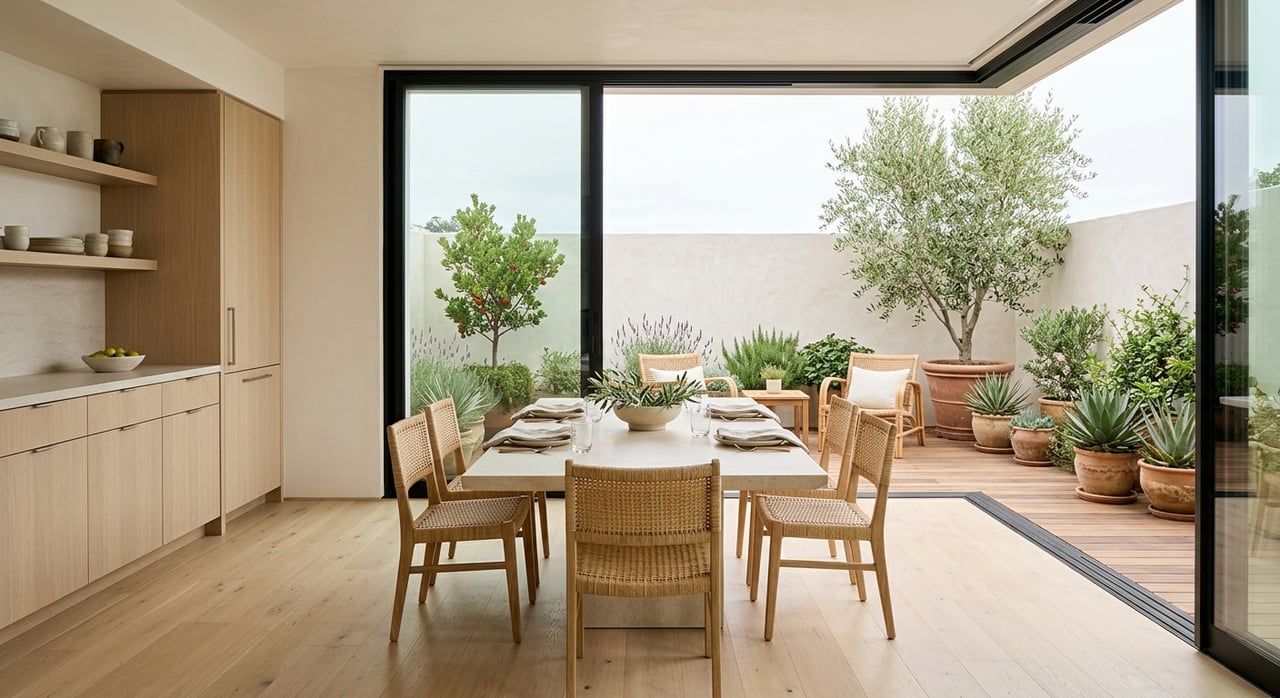
Pacific Palisades vs Santa Monica: Which Area Fits?
June 18, 2026
June 18, 2026
If you are torn between Pacific Palisades and Santa Monica, you are not alone. Both offer a coastal Westside lifestyle, but they live very differently day to day. If you are trying to decide where your next home will fit your routine, priorities, and budget best, this guide will help you compare the tradeoffs clearly. Let’s dive in.
At a high level, Pacific Palisades tends to feel quieter, more residential, and more shaped by topography and open space. It is a neighborhood within the City of Los Angeles, with about 27,000 residents, a small business core called the Village, and a setting defined by canyons, mountain edges, parkland, hiking trails, and ocean views.
Santa Monica is an incorporated beach city with a very different scale and rhythm. It covers 8.3 square miles, has about 93,000 residents, an estimated daytime population of 250,000, three miles of Pacific beaches, and more than 8 million annual visitors. In practical terms, that usually means more activity, more services, and more options close at hand.
If your first question is, Which one feels more like me? the simplest answer is this: Pacific Palisades leans residential and private, while Santa Monica leans urban-coastal and walkable.
Pacific Palisades is primarily residential, and that shapes the experience of living there. The area includes pockets such as Huntington Palisades, Marquez Knolls, Palisades Highlands, Rustic Canyon, Santa Monica Canyon, Castellammare, and California Riviera, each with its own setting and street pattern.
What stands out most is the connection to open space. Nearby destinations listed by the City include Potrero Canyon Park, Rustic Canyon Park, Santa Ynez Canyon Park, Temescal Canyon Park, Temescal Gateway Park, Topanga State Park, Will Rogers State Beach, and the Palisades Recreation Center. If you want your weekends and evenings to revolve around trails, views, and a calmer residential pace, that matters.
Santa Monica offers a broader mix of districts and a busier daily environment. The city highlights areas such as Downtown and Third Street Promenade, Main Street, Montana Avenue, Ocean Park, Pico, Pier and Ocean Avenue, and Wilshire.
That district structure gives you more day-to-day variety. Downtown has the highest concentration of shops, restaurants, and hotels, while Main Street and Montana Avenue each have their own local commercial identity. If you like being able to step out for errands, dining, beach time, or events without driving far, Santa Monica often makes that easier.
If you picture your next move in a single-family home, Pacific Palisades may feel more intuitive. City sources describe the neighborhood as primarily single-family homes, with some condos and apartments mixed in.
There is also a strong connection to rebuild and renovation potential in certain cases. Los Angeles building guidance for the area emphasizes single-family home designs common in the Palisades, along with wildfire-resilient construction methods and styles such as modern, traditional, and transitional. For buyers who value lot size, privacy, views, or the chance to tailor a property over time, that can be a major draw.
Santa Monica gives you a wider menu of housing types. The city’s historic-resources materials identify single-family homes, duplexes, triplexes, fourplexes, bungalow courts, apartment houses, courtyard apartments, and some high-rise residential towers, along with architectural styles that include Craftsman, Period Revival, and Mid-Century Modern.
That diversity creates more ways to enter the market depending on your goals. You may be comparing a condo near amenities, a townhome-style setup, a multi-unit property type, or a detached home in a more residential pocket. If flexibility matters more than having a classic detached-home neighborhood feel, Santa Monica gives you more choices.
One practical point for buyers in Santa Monica is the City’s Historic Resources Inventory. The city notes that more than 1,300 properties are included, and listed properties may require added review for exterior changes and disclosure at sale.
That does not make those homes less appealing, but it does mean your decision-making may need more upfront diligence. If you are considering updates or want a simpler path for future exterior changes, this is something to confirm early.
Price is often where the choice starts to sharpen. Recent market snapshots in the research report show Pacific Palisades with a median sale price of $2,829,048 and Santa Monica with a median sale price of $1,564,500. Median days on market were reported at 55 for Pacific Palisades and 47 for Santa Monica, with both described as somewhat competitive.
That citywide comparison suggests Santa Monica often has a lower overall entry point. At the same time, Santa Monica is not uniformly lower-priced. Zillow figures in the research report show Santa Monica city averaging $1,714,010, while the 90402 pocket averaged $4,759,745, which can rival or exceed many Palisades price points.
The takeaway is simple: Santa Monica may offer more price range flexibility overall, but premium coastal pockets in Santa Monica can sit firmly in luxury territory. Pacific Palisades generally aligns more consistently with higher-end detached-home pricing.
If convenience is a top priority, Santa Monica has an edge. The city highlights the Third Street Promenade, Downtown Farmers Market, Santa Monica Pier, and Santa Monica State Beach, all within a more concentrated urban setting.
This tends to support a more walkable routine. Whether you want coffee, shopping, beach access, dining, or city services in closer reach, Santa Monica usually provides more immediate amenity density than Pacific Palisades.
Pacific Palisades has a more compact amenity base centered on the Village and supported by nearby civic and outdoor destinations such as the Palisades Branch Library and multiple parks. For many buyers, that smaller footprint is part of the appeal rather than a drawback.
If you prefer a neighborhood that feels less commercial and less visitor-heavy, the Palisades experience may fit better. You are often choosing focus and privacy over volume and variety.
Transit access is another clear separator. Santa Monica’s transportation department says Big Blue Bus operates 20 routes across a 58-square-mile service area, and the city notes that multiple bus lines and the Metro E Line directly serve the Pier area.
Pacific Palisades does have bus service, including Big Blue Bus Route 9, but it is less transit-dense overall. If your weekly routine depends on broader transit choice, Santa Monica is generally the easier fit.
For buyers thinking about school structure, the two areas operate differently. Santa Monica is served by Santa Monica-Malibu Unified, a smaller district with 8,526 students in 2025-26 and a citywide school network.
Pacific Palisades is part of the LAUSD and charter landscape. The research report notes that Marquez Charter Elementary gives attendance-area priority to Pacific Palisades residents, and Palisades Charter High School returned to its main campus on January 27, 2026 after fire recovery work.
Because school assignment and enrollment details can change, many buyers want to verify the current options that apply to a specific address early in the home search. That helps you compare homes with a clearer picture of your practical day-to-day planning.
If Pacific Palisades is on your shortlist, the 2026 recovery context deserves careful attention. The City has said access passes are no longer needed, but there is still an active rebuild dashboard and a Draft Long-Term Recovery Plan in place.
For some buyers, this creates opportunity to consider finished homes, remodel candidates, or properties with rebuild potential. For others, it introduces more timing questions, more due diligence, and more interest in construction standards and neighborhood recovery progress.
Los Angeles building guidance for Palisades rebuilding also emphasizes wildfire-resilient methods and Palisades-appropriate design. If you are drawn to the area, it helps to be honest about your comfort level with a neighborhood in active recovery and with the process that can come with that.
If you want a quieter setting, more detached-home orientation, stronger ties to nature, and a more residential rhythm, Pacific Palisades may be the better match. It often appeals to buyers who value privacy, views, and space, and who are willing to weigh recovery-related timing or rebuild considerations where relevant.
If you want broader housing choices, more walkability, easier transit, and a larger set of shops, dining, and city amenities, Santa Monica may fit your routine better. It often works well for buyers who want a more connected coastal city lifestyle with more immediate convenience.
Neither choice is universally better. The right move depends on how you actually want to live each day, what type of home you need, and which tradeoffs feel worth it to you.
When you are comparing two Westside neighborhoods this closely, clarity matters. A calm, organized home search can make it much easier to sort out lifestyle fit, price strategy, and the details that affect long-term value. If you want help weighing Pacific Palisades against Santa Monica with a local, practical lens, connect with Janet Heinzle.
Stay up to date on the latest real estate trends.
Whether you’re buying, selling, or investing, Janet Heinzle offers clear guidance, strong advocacy, and a commitment to your success. Reach out today to begin a real estate experience defined by trust, transparency, and results.
Connect With Me To Learn More
11990 San Vicente Blvd Ste 100 Los Angeles, CA 90049