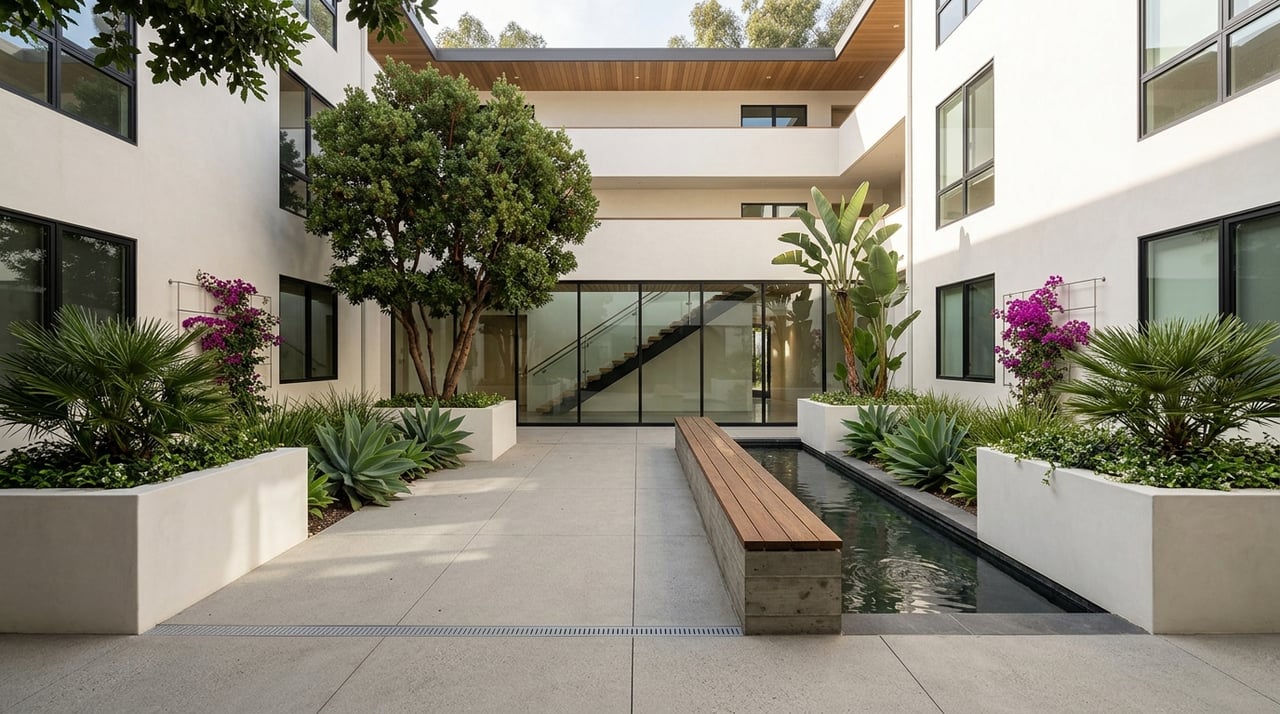
Understanding Condo And HOA Living In Santa Monica
July 2, 2026
July 2, 2026
If you are thinking about buying a condo in Santa Monica, the monthly dues are only part of the story. Condo and HOA living can offer a more managed, lower-maintenance ownership experience, but it also comes with shared rules, shared costs, and a different level of decision-making than owning a detached home. When you understand how those pieces fit together, you can make a much more confident choice. Let’s dive in.
In California, many condo and townhome communities are common interest developments governed by the Davis-Stirling Common Interest Development Act. In simple terms, that means you own your unit or separate interest, while the homeowners association manages shared parts of the property.
That shared structure is one of the biggest differences from owning a single-family home. You are not fully responsible for every part of the property, but you also do not have full control over everything either.
A condo owner and an HOA usually share maintenance responsibilities. In general, the association repairs, replaces, and maintains common areas, while you are responsible for your separate interest.
There is also a middle category called exclusive-use common area, which can include spaces intended for one owner’s use. In many cases, the owner maintains those areas, while the association handles repair or replacement unless the governing documents say otherwise.
This is the core tradeoff of condo living. You may take on less day-to-day property upkeep, but you need to understand exactly where your responsibilities begin and end.
Monthly dues are the main funding source for the association. Those dues may support common-area maintenance, reserves, insurance, and other shared operating costs.
The key is not just asking how much the dues are, but what they actually cover. Two communities with similar monthly dues can be very different if one is building healthy reserves and the other is deferring repairs.
Reserve planning is a major part of HOA financial health. California requires many associations to inspect accessible areas of major components at least once every three years, and the reserve summary must show current funding levels along with five-year projections.
For you as a buyer, reserves help answer an important question: is the association planning ahead for major repairs, or is it more likely to face financial pressure later? A well-documented reserve funding plan can give you a clearer picture of what may be coming.
California places limits on assessment increases without member approval. Regular assessments generally cannot increase by more than 20 percent in a fiscal year without approval from members.
Special assessments also have limits. If a special assessment exceeds 5 percent of the association’s budgeted gross expenses, member approval is generally required.
That does not mean dues never rise. It does mean there are rules around how sharply costs can increase without a broader vote.
One of the most common areas of confusion in condo ownership is insurance. The association’s insurance summary may describe coverage for shared property obligations, but it may not cover your personal belongings, interior upgrades, or every deductible exposure.
That is why the annual budget report is so important. It gives members a summary of insurance and is meant to prompt owners to review their own coverage needs carefully.
HOA living is not just about finances. It is also about policies that shape the day-to-day ownership experience.
California requires an annual policy statement that covers core topics like assessment collection, lien enforcement, discipline procedures, dispute resolution, and how owners seek approval for physical changes. If you want predictability, this document matters.
If you want to make physical changes to a condo or townhome, the HOA may require prior approval. When approval is required, the board must use a fair and reasonable process, respond in writing, and explain any denial.
The association also must give annual notice describing what kinds of changes need approval. For buyers who want to remodel, this is a critical part of due diligence.
If an association uses monetary penalties, it must distribute a penalty schedule. In general, a fine cannot exceed the lesser of the listed schedule or $100 per violation.
That does not mean every issue turns into a fine. It does mean the community should have a documented enforcement process rather than making decisions on the fly.
California gives members access to many association records. Board and member meeting minutes from non-executive sessions must be available within 30 days, and those minutes remain permanently available for inspection.
For a buyer, minutes can be especially useful. They often reveal recurring maintenance concerns, upcoming projects, and how the board handles community issues.
If you may rent out the property in the future, leasing rules deserve close attention. California does not allow governing documents to prohibit renting unless the restriction predates the owner’s title, and rental caps generally cannot be set below 25 percent of the separate interests.
At the same time, associations may still ban short-term rentals of 30 days or less. Before leasing, an owner must also provide the association with proof of the acquisition date and tenant contact information.
In Santa Monica, rental analysis can be more complex because city rent control rules may apply separately from HOA rules. According to the city, most residential rental buildings built before April 10, 1979, and some later units, are subject to rent control, and condominiums may also be rent-controlled depending on the unit’s history.
That means you should not assume a condo will function like a standard rental property just because the HOA allows leasing. The city’s rent-control status and the HOA’s leasing rules are two separate questions.
The city’s 2024 annual report says certain separately sold condominiums may qualify for rent-level decontrol if they are separately alienable, sold for value, and occupied by tenants who moved in after January 1, 1996, or are vacant or owner-occupied. Even then, just-cause eviction protections continue.
For controlled properties, Santa Monica says ownership changes, mailing-address changes, and new tenancies must be registered with the Rent Control Board. If long-term rental flexibility matters to you, this is an area to verify early.
Before removing contingencies, buyers in a common interest development should review the HOA disclosures carefully. California sellers are required to provide important association materials, and these documents can tell you far more than a listing summary ever will.
Focus on these items:
A strong document review can help you spot future costs before they become your problem. Pay close attention to the annual budget report and related financial materials.
Look for these items:
The best comparison is not just purchase price. It is total carrying cost plus rule flexibility.
When you compare a Santa Monica condo with a single-family home, weigh the monthly dues, reserve strength, insurance gaps, and possibility of future assessments alongside how much freedom you want for remodeling, leasing, and day-to-day decision-making.
Condo living can be a great fit if you value shared maintenance, a more structured ownership experience, and clearer community systems. It may be less ideal if your top priority is maximum control over the property.
The right move is not about whether HOA living is good or bad. It is about whether the specific building, rules, and financial setup match how you want to live and what you want the property to do for you long term.
If you are weighing condos, townhomes, or single-family options in Santa Monica, having a calm, detail-driven review process can make all the difference. For guidance tailored to your goals on the Westside, reach out to Janet Heinzle.
Stay up to date on the latest real estate trends.


Whether you’re buying, selling, or investing, Janet Heinzle offers clear guidance, strong advocacy, and a commitment to your success. Reach out today to begin a real estate experience defined by trust, transparency, and results.
Connect With Me To Learn More
11990 San Vicente Blvd Ste 100 Los Angeles, CA 90049