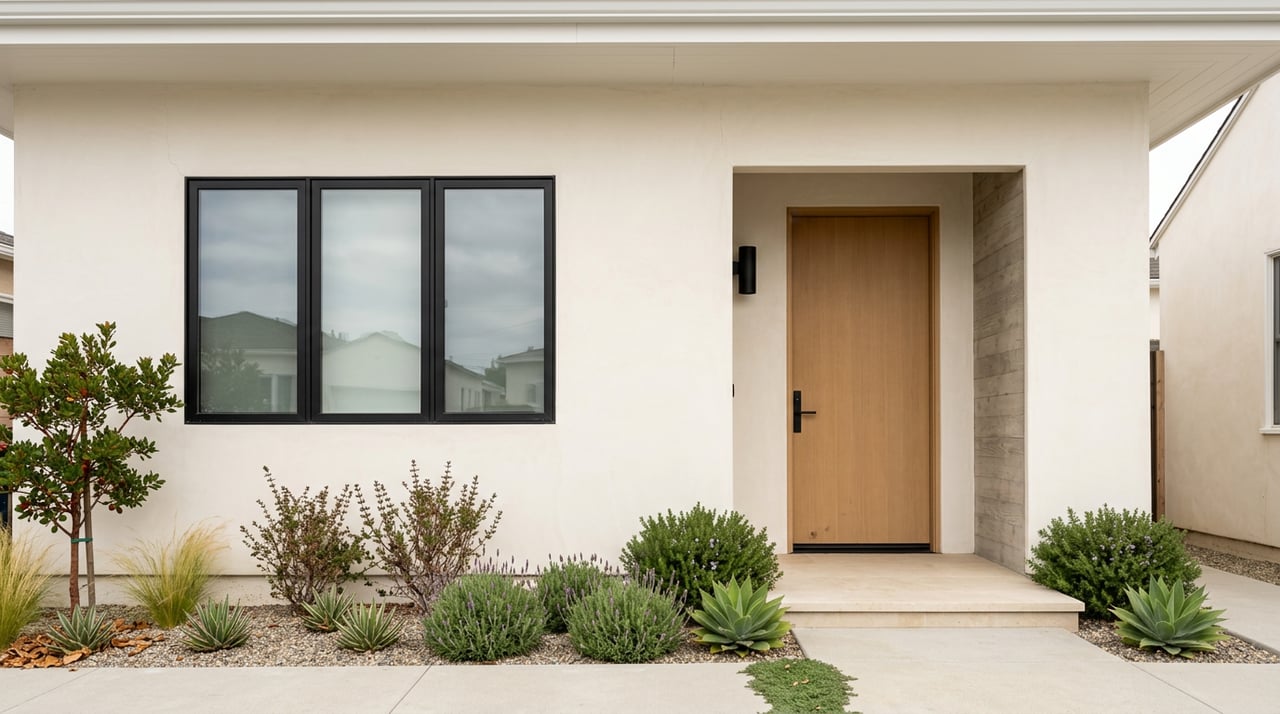
What Venice CA Home Prices by Sub-Neighborhood Look Like in 2026
July 16, 2026
July 16, 2026
Most buyers arrive in Venice with one number in their head. Depending on which portal they checked, it is somewhere between $1.9M and $2.6M. Redfin put the March 2026 median at $1.9M on 91 sales. Movoto reported $2.595M for April 2026. RubyHome's June 25, 2026 snapshot showed a $2.46M median list against 240 active listings and an 86-day average. All of these are accurate. None of them describe a single market.
The reason is not that Venice is unusually diverse in its housing stock, though it is. The reason is that a regulatory line runs through the neighborhood, roughly from the sand inland to Lincoln Boulevard, and it converts what looks like a pricing question into a permitting question. Two homes on the same block can carry the same list price and behave nothing alike in escrow. That is the story the median cannot tell.
The Venice Coastal Zone is not a soft boundary. Under the California Coastal Act, substantial construction, additions, demolition, or change of use inside the zone typically requires a Coastal Development Permit on top of standard LADBS permits. The California Coastal Commission defines "development" broadly enough to sweep in changes in intensity of use even where no construction is involved.
Los Angeles City Planning is now coordinating with the Coastal Commission on a draft Venice Local Coastal Program Land Use Plan, with a public-review draft expected in the second half of 2026. Until an LCP is certified, permit authority for many Venice projects sits in a dual-jurisdiction posture: the city processes the application, and the Commission retains appeal authority over parcels between the first public road and the sea.
For a buyer, this changes what a purchase price is actually buying. The house is one asset. The right to reshape it is a second, separate asset, and inside the Coastal Zone that second asset trades at a discount.
Venice has four rough tiers that behave differently in the current market. The numbers below reflect early-to-mid 2026 activity and should always be verified against fresh comps street by street.
| Sub-pocket | 2026 price band | What moves it |
|---|---|---|
| Venice Canals Historic District | Roughly $2.8M to $6M+, with a March 2026 median near $5.1M and per-foot pricing above $3,000 | Roughly 450 residences across Carroll, Eastern, Linnie, Howland, Sherman, and Grand canals; pedestrian-only access; historic protections cap supply |
| Walk streets and beach-adjacent blocks | Roughly $2M to $5M+ | Off-street parking, condition, and lot orientation drive spread |
| Abbot Kinney corridor, Silver Triangle, Milwood, Oakwood | Roughly $1.8M to $3M+ | Walkability to Abbot Kinney retail; renovation status; permit history |
| East of Lincoln | Roughly $1.5M to $1.8M as an entry band for single-family | Outside the Coastal Zone for most parcels; easier renovation math |
The gap between the top and the bottom of that table is not a lifestyle premium in the usual sense. It is a scarcity premium layered on top of a permitting premium. Canal-front and immediate beach-frontage lots cannot be manufactured, and the Coastal Act plus the Venice Canals historic overlay hold their supply flat. That is why the canals recorded a $5.1M median in March 2026 while the broader Venice number sat below $2M in the same window.
Buyers who plan to reshape a Venice home usually price two things: the acquisition, and the delta between a fully renovated comp and an as-is comp on the same block. In Venice that delta commonly runs $400,000 to $600,000. On paper, a value-add play looks obvious.
Then the Coastal Zone rewrites the timeline.
A Coastal Development Permit is not a rubber stamp. Coastal access, view corridors, environmental review, and community input all factor in. Sellers and their agents also need to be careful about representing development potential inside the zone, because overstating what a buyer can build is a disclosure liability. The practical result is that buyers of unrenovated homes are carrying the property, paying holding costs, and pricing insurance for canal or beach-adjacent addresses through a permit window that is not fully in their control.
Layered on top of that is the Mello Act. When a project involves demolition or conversion of a residential structure inside the coastal zone, the Los Angeles Housing Department runs an affordability determination based on three years of rental history and the income level of current residents. LAHD estimates the review at roughly eight to twelve weeks once documentation is complete, and a determination survives the denial of the related project, meaning it attaches to the parcel and follows a future application. For a buyer eyeing a small multi-unit teardown or a conversion play, this is often the deciding number, not the sales comp.
Short-term rental economics collapse in a similar way. Los Angeles's Home-Sharing Ordinance ties legal hosting to primary residence and registration. A pure investor STR pro forma does not survive contact with that rule, and the Coastal Zone overlay adds a second filter on top.
The mechanical effect on price: move-in-ready homes are outperforming fixers in Venice in 2026, and the fixer discount widens the closer a property sits to the water. That is the opposite of the intuition most buyers arrive with.
The single most useful discipline in this market is refusing to compare across sub-pockets. A canal home and a home three blocks east of Lincoln are not the same product with different views. They are different assets with different regulatory profiles.
A short diligence sequence that tends to hold up:
Sellers should read the same list in reverse. A clean permit file, a pre-listing Coastal Zone verification, and a disclosed Mello posture remove the questions that otherwise cause Venice deals to renegotiate at day 12.
The financing environment is a quieter variable in Venice than in most Westside neighborhoods, because a meaningful share of transactions at the top of the market close with cash or with heavily qualified financing. Thirty-year fixed averages sat near 6% in early March 2026 and near 6.47% by mid-June 2026. Those moves shrink the financed buyer pool at the multi-million-dollar tier but leave the cash-heavy canal and beach-adjacent segments largely intact. That divergence is another reason the "Venice median" behaves more like a blended index than a real price.
Why do Zillow, Redfin, Movoto, and Realtor.com publish different Venice medians in the same month? They use different geographic boundaries and different measurement windows. Zillow's ZHVI, Redfin's median sale price, Movoto's active listings, and Realtor.com's Venice Beach sub-area each capture a different mix. The right question is not which one is correct, but which one matches the sub-pocket you are actually shopping.
Is a Coastal Development Permit required for a straightforward interior remodel? Interior cosmetic work generally does not trigger a CDP. Additions, demolitions, exterior expansions, and changes of use inside the Coastal Zone generally do. The safe default is to verify parcel status before committing to a scope of work.
Does east of Lincoln avoid the Coastal Zone entirely? For most parcels, yes, and that is a real part of why the entry band there runs lower. Verify by parcel, because the boundary is not perfectly straight and a few blocks straddle it.
Are the six Venice canals treated as one market? They trade as a distinct tier, but Grand Canal frontage, corner lots, and homes with wider water views command premiums inside that tier. Roughly 450 residences share the district, and the buyer pool tends to be patient and pre-positioned.
Venice rewards buyers and sellers who treat it as five markets instead of one. The portal median is a headline. The parcel is the deal. If you would like a block-by-block read on where your budget lands and what a specific address will actually allow you to build, Janet Heinzle is glad to walk the numbers with you. Let's connect.
Stay up to date on the latest real estate trends.
Whether you’re buying, selling, or investing, Janet Heinzle offers clear guidance, strong advocacy, and a commitment to your success. Reach out today to begin a real estate experience defined by trust, transparency, and results.
Connect With Me To Learn More
11990 San Vicente Blvd Ste 100 Los Angeles, CA 90049