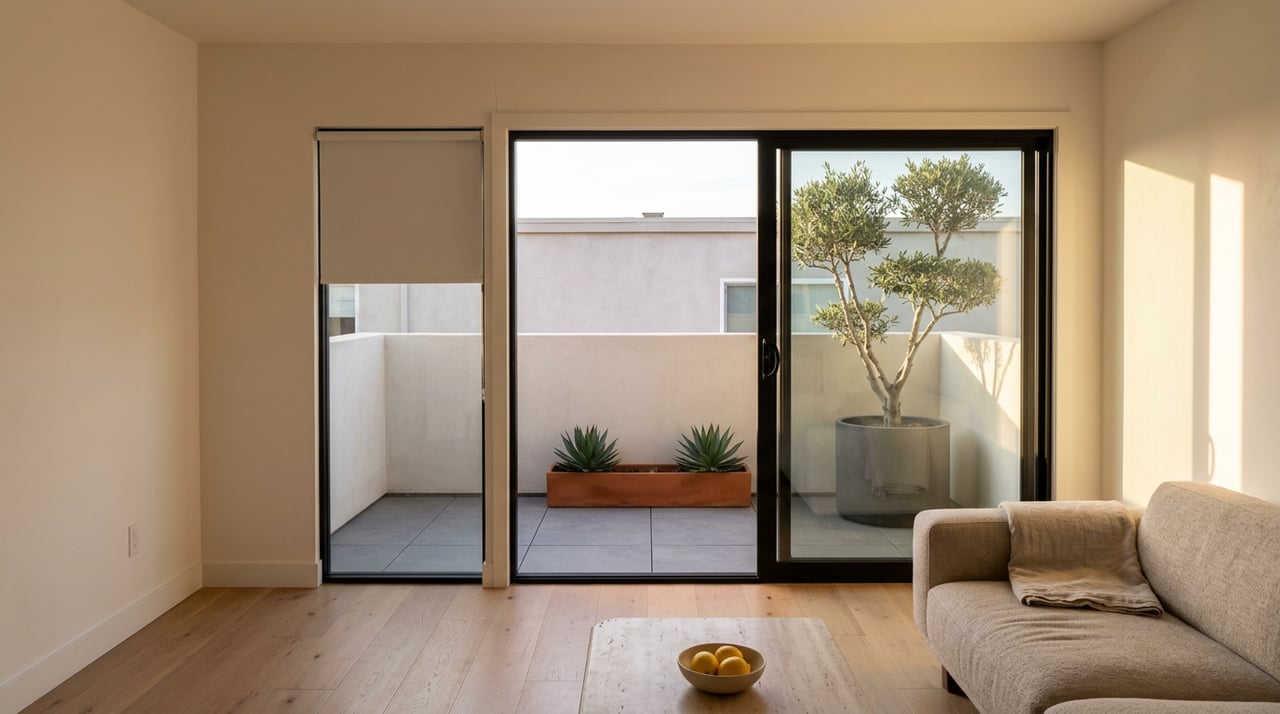
Decontrolled Rent, Controlled Tenant: The Santa Monica Condo Distinction Buyers Miss
September 17, 2026
September 17, 2026
"Can this unit be delivered vacant at close of escrow?"
It's the question every buyer's agent asks the moment a Santa Monica condo listing mentions a tenant in place. The answer usually comes back fast and confident: yes, of course, the rent isn't controlled anymore. What almost never gets said next is that the tenant's occupancy might still be. Those are two different things under Santa Monica law, and conflating them is where escrow timelines and buyer expectations go sideways.
Santa Monica's rent control system operates on two separate tracks that don't move together. One track governs how much rent a landlord can charge. The other governs whether and how a landlord can end a tenancy. A condo can graduate off the first track entirely and still be firmly stuck on the second. That gap is the thing worth understanding before you write an offer on a tenant-occupied unit, and it's the thing that explains why two condos that look identical on paper can carry very different timelines to occupancy.
The Costa-Hawkins Rental Housing Act is the state law that carved an exception into Santa Monica's 1979 rent control charter. Under Costa-Hawkins, a condo can qualify for rent-level decontrol if it's separately alienable, has been sold for value, and is either vacant, owner-occupied, or occupied by a tenant who moved in after January 1, 1996. Meet those criteria and the owner can set the rent at whatever the market will bear.
What Costa-Hawkins does not touch is eviction protection. Santa Monica's own rent control office is explicit about this: for units that qualify for rent-level decontrol, just-cause eviction protections under the rent control law continue to apply. A landlord still needs one of the specific, enumerated reasons in Section 1806 of the Rent Control Charter Amendment to end a tenancy, and still has to follow the notice and filing procedures that go with it. The rent can be market rate. The path to getting the unit back is not.
This is the detail that trips up buyers who assume a purchase contract resets the clock. It doesn't. The tenancy generally survives the sale unless there's already a lawful basis and a completed process to end it, and a seller who promises "vacant at close" without having verified that basis is promising something the law hasn't yet cleared.
Some Santa Monica condos share a specific origin story: they were apartments converted to condos under the Tenant Ownership Rights Charter Amendment, a 1984 measure that let building owners convert without a removal permit as long as two-thirds of tenants supported the application. TORCA came with a tradeoff. Tenants who were living in the building at the moment of conversion and chose not to buy their unit got a specific protection: the owner couldn't evict them later for owner move-in. Tenants who moved into the building after the conversion got no such protection. Their tenancy is governed by the ordinary rent control rules that apply to every other unit in the city.
A 2005 appellate case, Bohbot v. Santa Monica Rent Control Board, tested exactly this line. A landlord who owned a legally converted TORCA condo sought to evict a tenant who had moved in after the conversion, for owner occupancy. The tenant and the Rent Control Board argued the eviction should be blocked under the general rule against owner-occupancy evictions in condo conversions. The court disagreed, holding that TORCA's protection was built for participating and non-purchasing tenants present at conversion, not for anyone who rented the unit afterward. The practical result: two tenants in the same TORCA building, one who watched the conversion happen and one who signed a lease five years later, can have entirely different eviction protections despite living under the same roof.
| Tenant scenario | Owner-occupancy eviction allowed? | Governing rule |
|---|---|---|
| Present at TORCA conversion, didn't purchase | No | TORCA's built-in protection for non-purchasing original tenants |
| Moved in after TORCA conversion | Governed by standard Rent Control Law owner-occupancy rules | Bohbot v. Santa Monica Rent Control Board (2005) |
| Moved in after January 1, 1996, unit separately sold | Rent may be decontrolled, eviction still requires just cause | Costa-Hawkins Rental Housing Act |
Rent-level decontrol is not automatic, and the numbers show how slow the process actually is. Santa Monica's Rent Control Board estimated that roughly 3,100 TORCA-converted condo units citywide meet the basic Costa-Hawkins criteria that would let them qualify for decontrol. Actually getting confirmed is a separate step: as of the Board's 2023 Annual Report, only 28 units citywide were newly identified as qualifying that year, bringing the total confirmed count of decontrolled condominiums and single-family homes to just over 1,800, the majority owner-occupied. Meeting the criteria on paper and having decontrol confirmed by the Board are not the same milestone, and a seller's assumption that a unit "should" qualify is not the same as a filed determination.
If a seller does have lawful grounds to end a tenancy before closing, the price of doing it correctly is not small. Santa Monica requires relocation assistance for no-fault evictions, including owner move-in, Ellis Act withdrawal, and substantial renovation requiring vacancy. As of early 2026, base relocation payments run roughly $23,000 to $24,000 per unit, with additional payments required for tenants who are 62 or older or disabled. These figures are adjusted annually, so a seller working from a two-year-old number is working from the wrong number.
Owner-occupancy evictions carry their own strict conditions. The owner has to be a natural person holding at least 50 percent of the property, has to move in within 30 days of the tenant vacating, has to occupy the unit as a primary residence for at least a year, and can't already have a comparable vacant unit available. Miss any of these and the landlord has to offer the unit back to the evicted tenant along with reasonable moving expenses. An Ellis Act withdrawal is an even bigger commitment: notice periods run 60 to 120 days, specific disclosures go to the Rent Control Board, and if the units come back onto the rental market within five years, the displaced tenants get the right of first refusal at their previous rent.
None of this is a reason to avoid a tenant-occupied Santa Monica condo. It's a reason to know, before you remove contingencies, exactly which scenario you're buying into.
The city gives buyers and their agents the tools to check this before it becomes a problem mid-escrow. Santa Monica's Rent Control office maintains a searchable Look Up a Rent database where you can find the current Maximum Allowable Rent on file for any controlled unit, along with registration status. A tenancy start date that falls before or after January 1, 1996 changes the Costa-Hawkins analysis entirely, and it's a fact you can and should pin down before writing an offer, not after.
A few things worth confirming before contingencies come off:
New owners also have their own filing obligation. Santa Monica requires that any change in how title is held on a rent-controlled property be reported to the Rent Control Board within 30 days of the transfer. It's a small administrative step, but skipping it is the kind of thing that surfaces later at the worst possible moment, usually when a rent adjustment or an eviction filing gets challenged for a missing registration.
A Santa Monica condo's price should reflect its light, its parking, its HOA reserves and its walk to the beach. It should also reflect an honest answer to who is allowed to live there and when, because that answer is not always the same for two units on the same floor.
If you're weighing an offer on a Santa Monica condo with a tenant in place, or you're a seller trying to figure out what your building's TORCA history actually means for your timeline, Janet Heinzle can walk through the specific registration and conversion history with you before you're locked into a contract. Let's Connect.
Stay up to date on the latest real estate trends.





Whether you’re buying, selling, or investing, Janet Heinzle offers clear guidance, strong advocacy, and a commitment to your success. Reach out today to begin a real estate experience defined by trust, transparency, and results.
Connect With Me To Learn More
11990 San Vicente Blvd Ste 100 Los Angeles, CA 90049