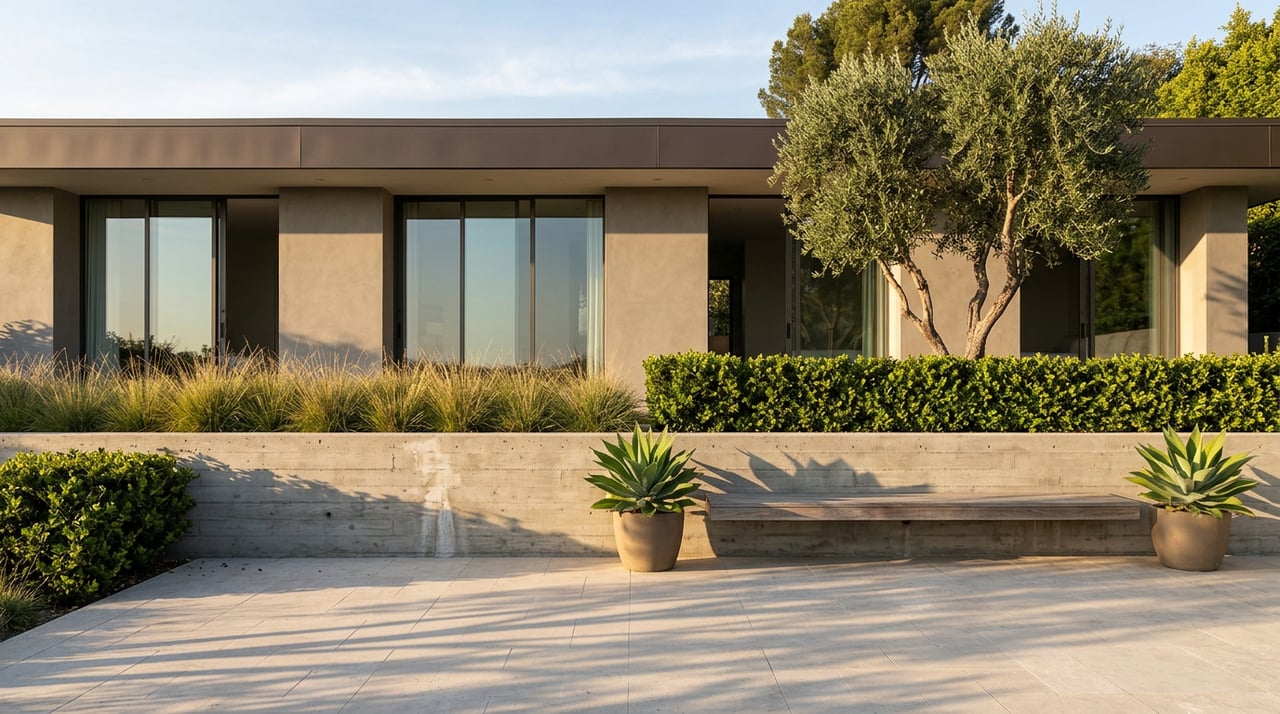
In Pacific Palisades, the Debris Report Decides Who Can Buy the Lot, Not the Price Tag
September 10, 2026
September 10, 2026
The first certificate of occupancy issued in Pacific Palisades after the January 2025 fire went out on November 21, 2025. It was a milestone worth marking, except the home wasn't a family coming back. It was a spec build by Thomas James Homes on Kagawa Street, a project that had been planned before the fire ever started.
That detail matters more than it looks like it should. If you're comparing Pacific Palisades to other Westside neighborhoods right now, the instinct is to treat the recovery as a single story with a single price tag attached. It isn't. A year and a half after the fire, the neighborhood is running two markets at once, and which one you're shopping in depends less on your budget than on a document most buyers never think to ask for.
Pull the median home price for Pacific Palisades this year and the source you ask changes the answer. In the three months ending April 2026, Redfin put the median at roughly $2.8M, down 36.4% year over year. A month later, three other portals told a different story for May 2026: Movoto's figure, drawn from 174 recorded sales that month, came in at $3.35M, Homes.com landed near $3.495M, and Zillow's modeled average sat at $3,044,325.
None of these sources made an error. They're each answering a slightly different question, and the gap between them is the most useful fact a buyer can have about this market right now.
Before the fire, there was essentially no such thing as a vacant residential lot for sale in the 90272 zip code. In the three months ending November 30, 2025, there were 309 active lot listings, compared with just seven a year earlier. Every one of those listings gets folded into the same comp pool as finished homes on most portals, and a cleared, unbuilt parcel sells for a fraction of what a house on the same footprint would fetch. Flood that pool with land sales and the median falls even if every standing home on the market is holding its value.
The volume data backs this up in a way the headline percentage drop doesn't. Redfin recorded 54 homes sold in Pacific Palisades in April 2026, up from 22 the year before, even as the median fell by more than a third. That's not a market getting cheaper. It's a market where a different kind of transaction is now large enough to move the average.
Here's the part that doesn't show up in a portal search. Whether a Pacific Palisades lot is financeable at all often depends less on its price than on where it sits in the debris-clearance sequence. Lots that have completed structural debris removal are generally eligible for conventional financing. Lots still waiting on that step typically aren't, which means the buyer pool for early-stage parcels narrows almost entirely to cash buyers.
That single fact explains a statistic that otherwise looks strange. In the three months ending November 30, 2025, investors bought 48 of the 119 vacant lots sold in the Palisades, a 40.3% share in a zip code where essentially no lots had traded a year earlier. It isn't that investors simply outbid displaced homeowners. It's that a meaningful share of available lots weren't reachable by anyone relying on a mortgage in the first place. The typical lot in that window sold for $1.6 million, but "typical" hides the range: pricing across the neighborhood runs anywhere from roughly $1.1M to $2.8M depending on size, location, and how far along the clearance process a given parcel is.
For a homeowner who lost a house and is weighing whether to rebuild or buy something already standing, this is the fork that actually matters. A cash buyer can absorb the uncertainty of an early-phase lot and wait out the permitting sequence. A buyer who needs a loan is effectively restricted to the smaller, pricier slice of inventory that has already cleared Phase 2, which is exactly the inventory investors are competing for too.
| Finished home | Vacant lot | |
|---|---|---|
| Typical buyer | Owner-occupant, often relocating temporarily elsewhere while deciding | Cash buyer or investor, sometimes a displaced owner planning to rebuild |
| Financing | Standard mortgage products apply | Often cash-only until structural debris clearance is complete |
| Price behavior in 2026 | Holding firm to slightly up on desirable streets | Trading well below finished-home value, wide range by clearance stage |
| What's scarce | Move-in-ready inventory itself | Lots that are far enough along to finance conventionally |
Pacific Palisades has always been a neighborhood where two homes at the same price sit in very different micro-markets, and the fire has sharpened that pattern rather than erased it. The Alphabet Streets and Marquez Knolls remain the more accessible entry points into the neighborhood. The Riviera and Huntington Palisades sit at the other end, where pricing runs well past the neighborhood median into eight figures for the most established addresses.
If you're cross-shopping the Palisades against Brentwood or Santa Monica right now, this is the comparison that actually holds up: a buyer at the neighborhood median is typically landing a mid-size home in one of the more accessible pockets, not a bluff-view estate in the Riviera. The trophy tier hasn't repriced down. What's changed is the amount of inventory sitting between those two ends, and right now there isn't much of it.
One more piece of the mechanism is worth understanding before you get attached to a specific lot. Much of Pacific Palisades sits inside the California Coastal Zone, which normally adds a permitting layer most rebuilds elsewhere in the region don't face. Under the emergency orders issued after the fire, projects that rebuild like-for-like and stay within 110% of the original home's size are exempt from needing a separate Coastal Development Permit. Go past that threshold and the project loses the exemption and moves into a longer waiver process.
The city has also built two pre-approved design pathways to shorten the review cycle: the Standard Plan Pilot Program, which offers a library of designs that have already passed plan check, and the Foothill Catalog, originally built for Altadena rebuilds and expanded into Pacific Palisades in March 2026. Choosing a design from either library can mean skipping the standard review cycle almost entirely. Choosing to modify or expand beyond the original footprint means signing up for the slower path, on top of whatever geotechnical review a hillside lot already requires.
None of this shows up in a listing description. It shows up in how long the seller has already been waiting, and in how realistic their timeline actually is.
If you're comparing Pacific Palisades to another Westside neighborhood, the honest framing is this: you aren't choosing between "expensive" and "on sale." You're choosing between two different kinds of transactions that happen to share a zip code. A move-in-ready home here is still competing against genuinely scarce inventory, and well-priced listings on desirable streets are still drawing real demand. A vacant lot is a different asset entirely, one where the purchase price is only half the underwriting question and the debris-clearance timeline is the other half.
Either path can make sense. Neither one is well served by a single median price pulled off a portal.
If I buy a lot, when can I actually break ground? It depends on where the parcel sits in the debris-clearance sequence, whether it falls inside the Coastal Zone, and whether the rebuild plan stays within the 110% like-for-like threshold. Ask the seller for documentation on clearance status before you assume a timeline.
Does a lower median price mean I can get more house for less money right now? Not for standing homes. The decline in the neighborhood-wide median is driven largely by the volume of lot sales entering the comp pool, not by finished homes losing value.
Pacific Palisades right now rewards buyers who ask about process as carefully as they ask about price. If you're weighing a lot, a rebuild, or a standing home here against options elsewhere on the Westside, Janet Heinzle can walk through what a specific parcel or listing actually requires before you commit. Let's Connect.
Stay up to date on the latest real estate trends.
Whether you’re buying, selling, or investing, Janet Heinzle offers clear guidance, strong advocacy, and a commitment to your success. Reach out today to begin a real estate experience defined by trust, transparency, and results.
Connect With Me To Learn More
11990 San Vicente Blvd Ste 100 Los Angeles, CA 90049